BoG: Cedi stability remains top priority
The Bank of Ghana says it will protect the cedi and contain inflation as global risks persist.

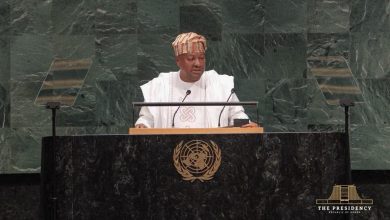
The Bank of Ghana (BoG) has pledged to sustain measures aimed at protecting the value of the cedi, keeping inflation under control and preserving financial stability, even as geopolitical tensions and rising global oil prices continue to pose risks to Ghana’s economic recovery. Governor of the Bank of Ghana, Dr Johnson Pandit Asiama, said the central bank would not become complacent over recent economic gains, stressing that developments in the global economy could still put pressure on Ghana’s prices, foreign exchange market and broader economic stability. Speaking at a stakeholder engagement in Sunyani in the Bono Region, Dr Asiama said the Monetary Policy Committee had maintained the Monetary Policy Rate at 14 per cent after assessing both domestic and international economic conditions.
He explained that the decision was intended to strike a balance between containing inflation and creating room for businesses, investment and economic expansion, while allowing the Bank to respond to emerging external shocks. Dr Asiama said inflation, although it had risen from 3.7 per cent in May to 5.3 per cent in June, remained below the Bank of Ghana’s target range. He attributed the recent increase largely to higher transport costs resulting from the rise in international crude oil prices, describing the pressure as temporary while assuring that the central bank would continue to monitor developments closely.
He stressed that maintaining low and stable inflation was essential for households and businesses because it enables families to manage their budgets, gives businesses greater certainty in planning and supports investment. The Governor also disclosed that Ghana’s economy grew by 6.4 per cent in the first quarter of the year, up from 6.2 per cent recorded during the corresponding period last year. According to him, the expansion was driven largely by the services and industrial sectors, with increased activity also recorded through stronger bank lending to businesses, higher trade, increased industrial production and a recovery in tourism.
Dr Asiama said the improvement in economic activity was being accompanied by growing confidence among businesses and consumers, while falling lending rates were making credit more accessible to enterprises seeking to invest and expand. The banking sector, he said, remained strong and stable, with banks well-capitalised, deposits continuing to increase and the quality of bank loans improving. A significant development, he noted, was the sharp increase in credit extended to businesses and households. Credit to the private sector grew by more than 41 per cent in June, compared with about nine per cent a year earlier.
The Governor said the substantial increase meant more businesses were gaining access to financing to expand operations, create employment and contribute to economic growth. Ghana’s external position has also remained resilient, supported by strong export performance in gold and cocoa. Dr Asiama said the performance of the two commodities had contributed to a higher trade surplus during the first half of the year, although increased global oil prices had simultaneously raised the country’s import bill. Ghana’s gross international reserves stood at about US$12.9 billion, equivalent to approximately five months of import cover.
He described the reserves as an important buffer against external shocks and a key resource for supporting stability in the foreign exchange market. The Governor acknowledged that the cedi had come under pressure earlier in the year as a result of global developments, particularly the conflict in the Middle East, but said the currency had since recovered. He reaffirmed the Bank’s commitment to maintaining an orderly and well-functioning foreign exchange market. Despite the encouraging economic indicators, Dr Asiama cautioned that Ghana could not afford to take its recent progress for granted. “The progress we have made is encouraging, but we must not become complacent,” he said, warning that events beyond Ghana’s borders could still affect the domestic economy.
He said the Bank would continue taking decisions designed to protect the cedi, maintain low inflation, preserve financial stability and support sustainable economic growth. “Our goal is simple: to create an economic environment where businesses can grow with confidence, households can plan for the future, and every Ghanaian can share in the benefits of a stable and growing economy,” he said. The Governor also used the engagement to emphasise the importance of stronger communication between the central bank and economic stakeholders. The meeting brought together representatives of the business community, the Association of Bankers, Association of Ghana Industries, Ghana Union of Traders Association, Ghana National Chamber of Commerce and Industry, community banks, forex bureaux and microfinance institutions, among others.
Dr Asiama said one of his priorities since assuming office had been to make the work of the Bank of Ghana more open and transparent and to strengthen its relationship with stakeholders. He stressed that macroeconomic stability could not be achieved by the central bank alone, but required cooperation among policymakers, businesses, financial institutions, traders, farmers and households. He expressed confidence that sustained collaboration and greater understanding among economic actors would strengthen efforts to preserve stability and improve economic outcomes for the Bono Region and Ghana as a whole.
By: Joyce Owusu