Mahama Pledges Support for Coastal Communities
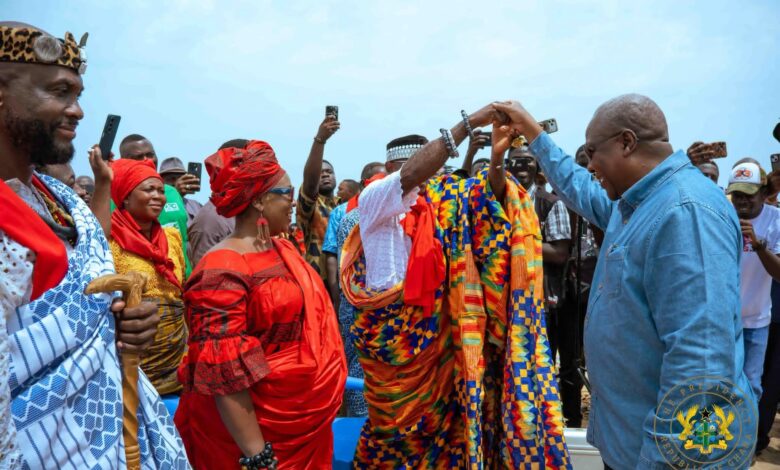
President John Dramani Mahama has visited Fuveme in the Volta Region to assess the damage caused by recent tidal waves, which have destroyed homes and displaced residents. According to #howedey, the President’s visit aimed to engage with residents on relief efforts and long-term coastal protection measures.
During his visit, President Mahama announced plans to allocate funds in the 2025 budget for the Blekusu Sea Defence Project Phase Two, emphasizing the government’s commitment to safeguarding vulnerable coastal communities. He highlighted the importance of nature-based solutions, such as planting coconut trees and restoring mangroves, to mitigate the effects of tidal surges.
The tidal waves have had a devastating impact on the community, with many residents left without access to basic necessities like shelter and food. President Mahama’s visit has brought hope to the affected communities, who are eager for support and solutions to their plight.
The President’s visit follows reports of the sea breaching parts of the coastline, and he assured residents that work has resumed on the World Bank-supported WACA project, valued at $150 million, aimed at addressing coastal erosion and flooding.
The government’s commitment to addressing the challenges posed by climate-related disasters is evident in its efforts to support affected communities and invest in long-term solutions.
Call or WhatsApp +233 20 2190 250 and share your story.
Source: Stella Sunu