COCOBOD Fires Back at Minority Over Cocoa Bill
COCOBOD says Parliament rigorously vetted the law and removed contentious provisions before passage.
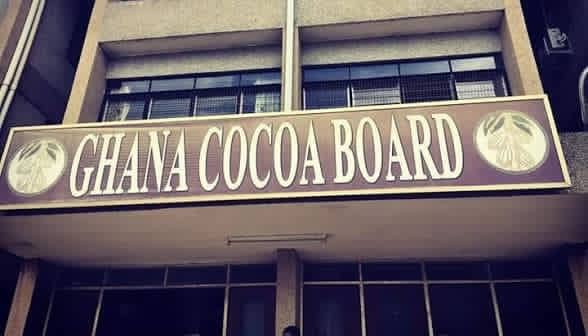
The Ghana Cocoa Board (COCOBOD) has rejected growing criticism of the newly passed Cocoa Bill, insisting that the legislation poses no threat to cocoa farmers and was subjected to rigorous scrutiny before being approved by Parliament. Head of Public Affairs at COCOBOD, Jerome Kwame Sam, dismissed claims that the bill contains provisions detrimental to farmers, arguing that the legislation was specifically designed to strengthen protections for cocoa farms and introduce reforms to Ghana’s cocoa sector. “There’s absolutely nothing,” Mr Sam said when asked whether there was anything fundamentally wrong with the bill.
The legislation, which was passed by Parliament last month and is awaiting presidential assent, has triggered controversy, particularly over provisions restricting the conversion of cocoa farms to other uses. The Minority has continued to raise concerns about aspects of the legislation, including its potential implications for farmers and land use within cocoa-growing communities. Mr Sam, however, challenged the basis of those objections, saying the Minority had opposed the bill from the outset despite the extensive legislative process it underwent. “I have been trying very hard to comprehend when it comes to the narrative being pushed by the Minority, because from day one the Minority have been in arms against this new bill for reasons best known to them,” he said.
According to Mr Sam, a careful reading of the legislation shows that its overriding objective is to protect cocoa farmers and strengthen the legal framework governing the industry. He said there was little justification for portraying the bill as harmful to farmers when several of its provisions are intended to preserve cocoa production and protect cocoa-growing areas. “…there is nothing in the bill that should be of much concern to the cocoa farmer because if you read the bill in pleno, you could see that the bill seeks to protect the interest of the cocoa farmer,” he said.
He further disclosed that the bill introduces several reforms that were not contained in previous laws regulating the cocoa sector. “Well, there are a number of reforms that have been introduced in the bill, which ab initio never existed in any of the laws that govern the sector,” he said. Mr Sam therefore questioned claims that the legislation was “not fit for purpose” or contained provisions inimical to farmers. “So if somebody should come and they label the bill as not fit for purpose or certain provisions in there that are inimical to the interest of the cocoa farmer, then I find it quite difficult to understand where the person is coming from,” he said.
Mr Sam also strongly disputed suggestions that the legislation was drafted and passed without adequate consultation or parliamentary examination. He said COCOBOD first engaged experts in preparing the bill before the draft was subjected to further examination by Parliament’s legislative committee. “Apart from engaging experts for the draft of the bill, we had opportunity to also meet with the legislative committee in Parliament, where they also scrutinized the bill,” he said. According to him, lawmakers subsequently considered the bill clause by clause, with legal experts and legislators identifying provisions that required amendment or removal. “They expressed their views, their opinions, where there should be amendments, there were amendments, where there ought to be complete deletion or expunge. They did say, and all that,” he said.
Mr Sam pointed to the removal of a provision concerning mining licences as evidence that Parliament did not merely rubber-stamp the proposed legislation. He explained that the original provision required a person who had secured a mining licence to obtain express permission from the Chief Executive of COCOBOD before proceeding with activities affecting cocoa areas. The provision, he said, was subsequently found to be inconsistent with the constitutional and statutory framework governing Ghana’s mineral resources and mining licences. “If somebody has gone through the right process and has been issued a licence, and then you say that an express permission would have to be granted by the Chief Executive of COCOBOD, then it contradicts provisions in the Constitution,” he said. “So it has to be Parliament dealing with this,” Mr Sam added.
For Mr Sam, the amendment demonstrated that Parliament had ample opportunity to scrutinize the legislation and make substantive changes before its passage. He questioned how provisions could have been amended or deleted if lawmakers had not been given sufficient time to examine the bill. “If Parliament indeed had not had the opportunity to scrutinize the bill, how would these things have been dealt with?” he asked. He said attempts to portray the legislative process as one in which Parliament had little or no opportunity to examine the bill were misleading. “So the impression created out there as though Parliament never had any time or opportunity to dealing with the bill is something of much concern, and it comes to the credibility of the narrative being put out there by the Minority,” he said.
With the Cocoa Bill now awaiting presidential assent, attention is likely to remain focused on the concerns surrounding restrictions on the conversion of cocoa farms and the broader implications of the new legal framework. COCOBOD, however, remains firm in its position that the legislation is necessary to protect Ghana’s cocoa industry, safeguard farmers’ interests and introduce reforms needed to strengthen the sector.
Source: Joy News
Author: Joyce Owusu