US Blocks Chinese Humanoid Robots Over Security Fears
Washington's latest technology crackdown targets China's booming robotics industry, citing cybersecurity and national security concerns.
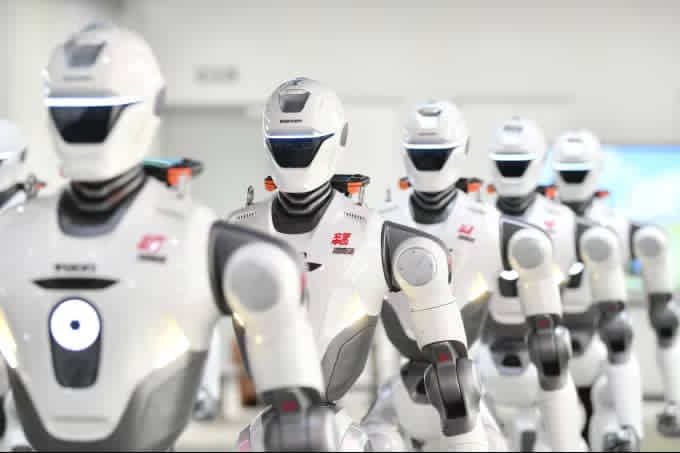
The United States has banned the import of new humanoid and quadruped robots from foreign manufacturers, a move that largely targets China and marks another major escalation in the technological rivalry between the world’s two largest economies. The restriction, announced by the Trump administration, also covers power converters used to connect renewable energy infrastructure and batteries to the electricity grid. However, the measures do not apply to robots that are already operating within the United States.
US authorities said the decision was taken to protect national security, arguing that internet-connected robots could expose the country to cybersecurity threats, compromise sensitive data and create vulnerabilities in critical infrastructure. According to the Federal Communications Commission (FCC), the devices could introduce supply chain risks capable of disrupting both the US economy and national security.
The decision follows a national security assessment by an interagency body convened by the White House, which concluded that connected robots could collect data that may be exploited by hostile actors for surveillance, intelligence gathering or even remote control of the machines. US officials have previously raised similar concerns in restricting Chinese-made electric vehicles and, more recently, foreign-made drones. The latest action comes as China has emerged as the dominant force in the global humanoid robotics industry. While the United States remains a leader in developing advanced artificial intelligence models, China has rapidly expanded its strength in AI-powered consumer applications and robotics by leveraging its vast manufacturing capacity and ability to commercialise new technologies quickly.
China now accounts for the overwhelming majority of the world’s humanoid robot production. Last year, Chinese manufacturers supplied about 90 per cent of global shipments, while American competitors, including Tesla and Figure AI, have yet to achieve large-scale manufacturing. The United States has also been the largest overseas market for Chinese-made humanoid robots, making the new restrictions a significant shift in the industry’s global trade landscape.
Beijing however has strongly condemned the ban. Chinese Foreign Ministry spokesperson Mao Ning accused Washington of misusing national security concerns to suppress Chinese companies, insisting that protectionist measures would weaken rather than strengthen US competitiveness while hurting American businesses and consumers. China’s Ministry of Commerce also criticised the decision, describing it as unilateral bullying and market distortion, and urged the United States to reverse the ban, warning that China would take necessary measures to protect its interests.
China’s humanoid robotics industry has grown rapidly in recent years and now includes more than 140 manufacturers supported by an expanding industrial supply chain. A recent report by legal research platform LexisNexis ranked six Chinese companies among the world’s top ten humanoid robotics startups based on patent strength, with Chinese firms occupying the top five positions ahead of leading competitors from the United States and Germany.
Industry analysts believe the latest restrictions could benefit American robotics firms such as Tesla, Figure AI and Boston Dynamics by reducing competition in the domestic market. However, experts say the long-term impact on Chinese manufacturers is likely to be limited because many companies had already anticipated tighter US restrictions amid worsening geopolitical tensions.
Several Chinese robotics firms, including Unitree, are preparing for public listings this year and have increasingly shifted their attention towards Europe and other international markets as alternative destinations for expansion. The ban also comes weeks after US technology company Nvidia announced a research and development partnership with Unitree. During the same period, the US Government designated Unitree as a potential national security risk over alleged links to the Chinese military, preventing the company from securing contracts with the US Department of Defense.
Analysts say the latest measures underscore the growing competition between Washington and Beijing over artificial intelligence, robotics and other emerging technologies, with both countries seeking to secure leadership in industries expected to shape the future global economy.
Source: CNN
Author: Joyce Owusu