Judiciary Must Earn Public Trust – Asiedu Nketia
NDC chairman urges reforms to make justice more accessible, timely and credible.
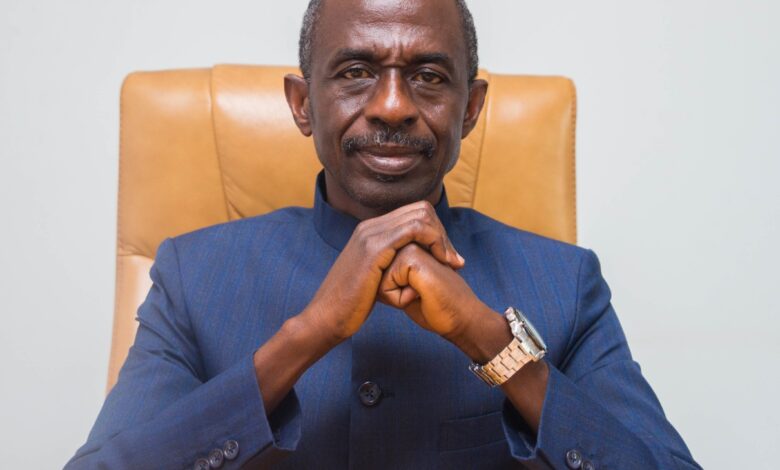
National Chairman of the ruling National Democratic Congress (NDC), Johnson Asiedu Nketia, has urged far-reaching reforms to strengthen public confidence in Ghana’s judiciary, arguing that judicial independence can only effectively protect democracy when citizens trust the justice system to be fair, accessible and timely. He said the judiciary must be sufficiently independent to check political power and protect constitutional rights while remaining accountable to ethical standards, transparency and legitimate public scrutiny. Mr Asiedu Nketia made the call on Tuesday, August 11, 2026, during the 2026 Goodluck Jonathan Foundation Democracy Dialogue in Bauchi, Nigeria, held on the theme: “Beyond Elections: Can Political Parties and the Judiciary Save African Democracy?”
Speaking during a panel discussion on political parties and the judiciary, he described the courts as an essential part of democratic governance because electoral contests and political disagreements inevitably produce disputes involving elections, constitutional limits and fundamental rights. “The judiciary is indispensable because political competition inevitably produces disputes over elections, rights and constitutional boundaries.” Mr Asiedu Nketia pointed to Ghana’s presidential election petitions arising from the 2012 and 2020 elections as evidence of the important role the judiciary can play in containing political tensions. He recalled that the 2012 presidential election petition was decided by a five-to-four majority after a lengthy hearing, while the Supreme Court unanimously dismissed the 2020 presidential election petition.
Although political actors disagreed with aspects of the proceedings and the reasoning behind the decisions, he noted that the parties ultimately accepted the outcomes. He said this demonstrated why constitutional mechanisms for settling political disagreements must be respected, particularly in situations where electoral disputes could otherwise spill into broader social and political tensions. The National chairman cautioned, however, that acceptance of judicial authority should not be confused with an obligation to remain silent about court decisions. He said citizens and political actors had a legitimate right to scrutinize and criticize judicial decisions, provided such criticism did not degenerate into threats, intimidation or personal attacks against judges.
“Legitimate criticism is part of constitutional democracy; intimidation, threats and personal attacks are not.” Mr Asiedu Nketia said judicial independence should protect judges from political, financial and personal interference but should not place the judiciary beyond standards of accountability. “Judicial independence means freedom from political, financial and personal influence, but it does not mean freedom from ethical standards, transparency, consistency or public accountability.” He cited findings from Afrobarometer’s Round 10 survey to underline what he described as a worrying gap between constitutional protections for the judiciary and public perceptions of the justice system. According to him, only 35 per cent of Ghanaians surveyed said they trusted the courts “somewhat” or “a lot”.
He further said 50 per cent of respondents were not confident that an ordinary person who had suffered a wrong could obtain justice. Only 37 per cent believed they could afford to take a legal problem to court, while 38 per cent believed that cases would be resolved within a reasonable period. Mr Asiedu Nketia stressed that the figures represented public perceptions rather than findings on the actual performance of individual courts or judges. Nevertheless, he said such perceptions were important because public confidence was fundamental to the authority and effectiveness of democratic institutions.“Judicial authority cannot depend only on constitutional text; it must also rest on citizens’ confidence that justice is accessible, impartial and timely.”
To address the concerns, he called for stronger legal aid services and improved access to reliable information on the performance of the courts. He also advocated greater transparency in the criteria used to appoint and promote judges, as well as the prompt publication of constitutional judgments. He said such measures would allow citizens and legal practitioners to better understand judicial decisions and assess the performance of the justice system. According to him, improving access to justice should be treated as part of the broader effort to strengthen democratic institutions rather than as a responsibility belonging exclusively to judges and lawyers.
Mr Asiedu Nketia said African democracies required courts capable of restraining governments, protecting opposition parties, safeguarding fundamental rights and enforcing constitutional boundaries. However, he warned against a judiciary that could be perceived as assuming the role of elected political institutions. He said courts should not become “alternative political chambers” or replace decisions that properly belong to elected representatives and citizens with judicial preferences. The challenge, he said, was to ensure that judges had the courage to enforce constitutional limits while exercising restraint in matters that fell within the legitimate authority of elected institutions. Mr Asiedu Nketia also advocated sustained engagement among political parties, the judiciary, electoral management bodies, civil society organisations, the media and academic institutions.
He said dialogue should take place routinely rather than only after elections had produced disputes serious enough to threaten national stability. “Dialogue should not begin only when an election dispute threatens national stability.” He argued that early engagement could help build mutual understanding of constitutional boundaries and reduce the likelihood of political disagreements escalating into institutional crises. In his concluding remarks, Mr Asiedu Nketia maintained that the judiciary’s most durable protection would come from public confidence rather than political goodwill.
He said courts must remain insulated from political power while delivering remedies that citizens consider fair, accessible, prompt and properly explained. “The judiciary must remain independent of political power while providing remedies that are impartial, accessible, timely and convincingly reasoned.” He added that the judiciary’s strongest protection was not the goodwill of political leaders but citizens’ confidence in its independence and integrity. Mr Asiedu Nketia said African democracy would be strengthened when courts administered justice without fear or favour, political parties respected constitutional boundaries, governments remained accountable and citizens continued to participate in democratic governance beyond election periods.
By: Joyce Owusu