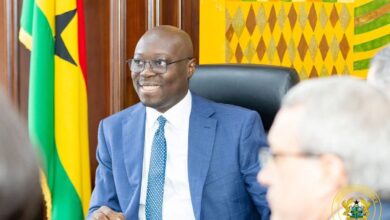
Ato Forson Declares Ghana Has Overcome Original Sin

Finance Minister Cassiel Ato Forson has told Parliament that Ghana has overcome what he termed the “original sin” of public finance, asserting that the state can now borrow for the long term in its own currency.
Delivering the mid-year budget review for 2026, Dr Forson characterized the milestone as the outcome of disciplined fiscal consolidation and credible monetary stewardship, not political expediency. He stated “We have overcome the original sin. Now we can borrow for the long term in our local currency.” He further noted that the creditor community is now approaching Ghana for facilities, but government is exercising prudence in uptake.
The economic significance is structural. Issuing long-dated cedi instruments eliminates the currency mismatch that historically amplified debt-service costs and exposed the budget to external shocks. By anchoring liabilities domestically, government reduces refinancing risk, lowers exposure to exchange-rate volatility, and creates fiscal space for counter-cyclical spending. That translates directly into improved sovereign risk premiums and a more predictable cost of capital.
The GDP impact is already materializing. Lower borrowing costs crowd in private investment, as banks reprice lending away from risk-off postures. Predictable long-term financing enables the state to front-load infrastructure, energy, and industrialization projects with higher fiscal multipliers, thereby expanding productive capacity and employment. Monetary stability, reinforced by reduced dollarization of debt, also anchors inflation expectations, which in turn supports real household income and consumption.
This trajectory reverses a decades-long constraint where reliance on short-term external debt compressed growth potential. With a deeper domestic yield curve, pension funds and institutional investors can now match assets to liabilities without currency hedging, improving capital formation. The result is a more resilient growth model less susceptible to global rate cycles and capital-flow reversals.
Government maintains that this is competent economic management, not mere rhetoric. The immediate task is to deploy the newfound latitude strategically, ensuring that borrowing finances productivity-enhancing assets rather than recurrent outlays. If sustained, the shift positions Ghana to achieve higher trend growth, stronger debt dynamics, and durable macroeconomic credibility.
Call or WhatsApp +233 20 2190 250 and share your story.
Author: Korkor Anumu