*Volta Strengthens GBV Response; Stakeholders Demand Action on Persistent Challenges*
By Patience Esi Tamakloe
Domestic violence rises as sexual abuse cases decline; agencies cite logistics gaps.
Stakeholders in the Volta Region have renewed calls for urgent action to address persistent operational challenges in the fight against Gender-Based Violence (GBV), as new data reveals mixed trends in reported cases.
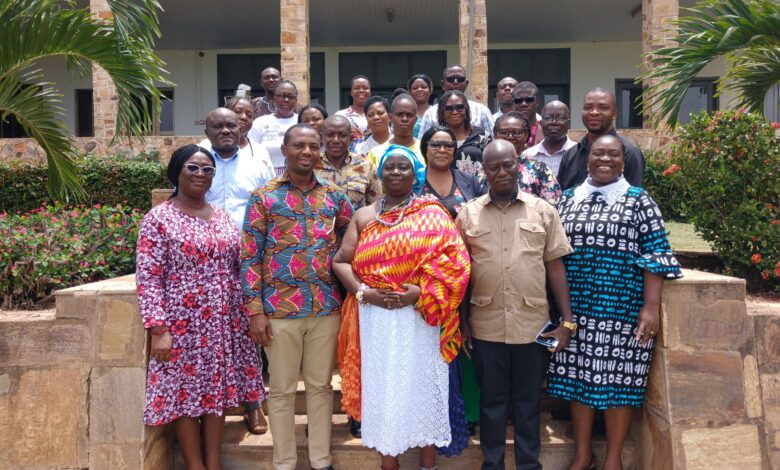
The meeting, held under the Essential Services Package for GBV survivors, was supported by the United Nations Population Fund (UNFPA) Ghana under the auspices of the Volta Regional Coordinating Council.
It brought together key institutions including the Ghana Health Service, Ghana Police Service (DOVVSU), the Department of Social Welfare, Department of Gender, Judicial Servic of Ghana, and the Commission on Human Rights and Administrative Justice.
About 30 participants drawn from these institutions attended the meeting.
*Mixed trends in GBV cases*
A Senior Public Health Officer at the Regional Health Directorate of the Ghana Health Service, Dzidefo Kofi Agbavor, said that while sexual abuse cases had declined, domestic violence cases were rising in the region.
He said sexual abuse cases reduced from 98 in 2022 to 50 in 2025, with 15 cases already recorded in the first quarter of 2026.
However, domestic violence cases increased from 563 in 2023 to 674 in 2025, with 160 cases recorded in the first quarter of 2026.
“We are seeing a reduction in some indicators, but others are rising. This tells us the problem is evolving and requires sustained, targeted interventions,” he said.
Mr Agbavor noted that Keta, Ketu North, South Dayi, and Adaklu were among the districts contributing the highest number of domestic violence cases in 2025.
Teenage pregnancy trends
He further indicated that teenage pregnancies among girls aged 10 to 14 had reduced from 182 cases in 2023 to 143 cases in 2025.
However, overall teenage pregnancies increased from 5,289 in 2023 to 5,413 in 2025.
In the first quarter of 2026 alone, a total of 1,235 teenage pregnancies were recorded, including 43 cases among girls aged 10 to 14.
“While we are making progress in reducing pregnancies among younger adolescents, the overall numbers remain high and require intensified prevention efforts,” he added.
*Community-level interventions*
Mr Agbavor said the Ghana Health Service in the Volta Region, working through its partners and collaborators, had intensified measures to address the situation at the community level.
These include targeted public education and sensitisation programmes, stakeholder engagements, and community outreach activities such as durbars.
He added that the Service was also promoting adolescent-focused initiatives, including peer support systems and community participation programmes aimed at preventing abuse and supporting survivors.
*Coordination improving*
The Regional Director of the Department of Gender, Thywill Eyra Kpe, said the Essential Services Package was designed to ensure survivors received coordinated support across health, justice, social welfare and policing sectors.
“The aim is to create a system where survivors receive comprehensive services — health, justice, and social support — in a coordinated manner,” she said.
She explained that the platform also served as a learning and advocacy space to address emerging issues such as defilement, sodomy and non-maintenance.
Ms Kpe, however, raised concern about reporting gaps, particularly among male survivors.
“Many men access health services but do not report to the police. We need reporting at both levels to get a full picture and respond effectively,” she noted.
*Logistics constraints*
The Domestic Violence and Victim Support Unit (DOVVSU) of the Ghana Police Service said persistent logistical and financial challenges were undermining progress.
A DOVVSU coordinator, ACP Brown Mercy Wilson, said although collaboration among agencies was strong, unresolved challenges continued to affect operations.
“We keep discussing the same challenges, yet little is done about them. Without addressing them, we cannot expect different results,” she stated.
“If we are unable to move to handle cases, then it means the case is not addressed. That is the reality we face,” she added.
*Need for stronger systems*
The Regional Director of Social Welfare, Stella Mawusi Mawutor, highlighted the role of the Infrastructure Standard Operating Procedures (ISSOP) in improving coordination.
“Previously, cases were left hanging because roles were not clearly defined. ISSOP now provides a harmonised framework that ensures timely and coordinated responses,” she explained.
*Legal gaps highlighted*
An official from the Commission on Human Rights and Administrative Justice, Dansu Oduro, cited a case that exposed legal challenges affecting women in informal unions.
“A woman who was publicly recognised as a widow during funeral rites was later denied inheritance because there was no formal marriage,” he said.
*Call for action*
Stakeholders called for increased investment in logistics, stronger enforcement of laws, and sustained public education.
The involvement of the Ghana Journalists Association was also highlighted as key to raising awareness and promoting behavioural change.
*Commitment reaffirmed*
Participants reaffirmed their commitment to strengthening collaboration and improving services for survivors, stressing that sustained effort and adequate resourcing were critical to reducing GBV in the Volta Region.