Accra-Kumasi Expressway: Mahama Stakes $2 Billion Taxpayer Gamble

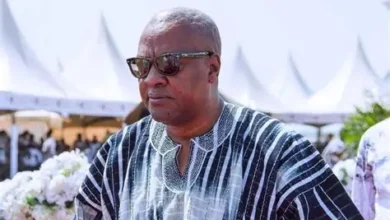
President John Dramani Mahama has announced in Accra that his administration has ring-fenced two billion dollars for the construction of the Accra-Kumasi Expressway, disclosing that the money is already lodged in a dedicated account at the Bank of Ghana and will be financed entirely from domestic revenue rather than external borrowing.
Speaking on the financing architecture for the corridor, the President stated that the full allocation will be consolidated before the close of the year, positioning the project as a sovereign-funded intervention at a time when Ghana’s infrastructure deficit continues to weigh on logistics and productivity. According to GHOneNews, President Mahama underscored that the facility is sitting in a special account, a move analysts interpret as an attempt to insulate procurement from fiscal volatility and restore investor confidence in public works execution.
The disclosure marks a decisive pivot in the political economy of road infrastructure. Unlike previous dual-carriage and interchange projects bankrolled through Eurobonds and syndicated loans, the administration is framing this expressway as a taxpayer-led legacy asset. Transport economists note that deploying domestic capital for such a strategic artery could reduce debt sustainability risks while accelerating right-of-way acquisition and contractor mobilization along the stretch.
Beyond the asphalt, the announcement dovetails with a broader modernization of road governance. The Ghana Police Service is scheduled to commence pilot deployment of its digital traffic enforcement platform, Traffitech, on September 14, a system designed to automate infraction detection and curtail rent-seeking at checkpoints. The convergence of a high-speed corridor and digitized enforcement signals an integrated approach to safety, compliance and corridor efficiency.
For commuters and haulage operators who have endured decades of carnage, congestion and vehicle attrition on the existing route, the proposed expressway represents both economic lifeline and political litmus test. If executed with transparent procurement, stringent supervision and timely disbursement, the corridor could compress travel time, de-risk agricultural value chains and anchor Kumasi as a resilient inland logistics hub.
Call or WhatsApp +233 20 2190 250 and share your story.
Author: Korkor Anumu