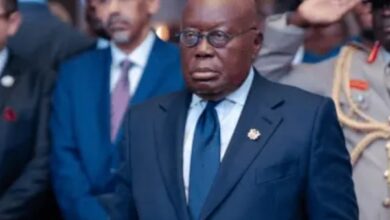
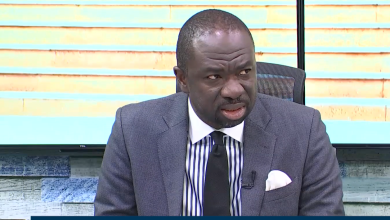
GoldBod Profits Dispute Deepens: Sammy Replies Afenyo
Sammy Gyamfi says audited accounts show GH¢5.4bn surplus as GoldBod outlines major expansion plans

The growing political dispute over the financial performance of the Ghana Gold Board (GoldBod) has taken a fresh turn, with Goldbod CEO, Sammy Gyamfi dismissing claims that the institution has incurred losses, pointing to its audited 2025 financial statements as evidence of substantial surpluses. Gyamfi says the accounts show an operational surplus of GH¢907 million and an overall surplus of GH¢5.4 billion, directly contradicting assertions by Minority Leader Alexander Afenyo-Markin that GoldBod has suffered losses. In a statement responding to the Minority Leader, Gyamfi described the losses claim as false and challenged critics to rely on the institution’s audited accounts rather than political assertions.
He cited page 16 of GoldBod’s Annual Report and Financial Statements for the year ended December 31, 2025, saying the figures clearly establish that the institution recorded a positive financial position. “The blatant lie being persistently peddled by Afenyo Markin that the GoldBod has made losses, is only a figment of his hallucinatory imagination,” Gyamfi said, accusing the Minority Leader of misleading the public. He added that the financial statements were prepared and published following an audit by the Auditor-General, insisting that the figures should settle the controversy. “For the avoidance of doubt, this audit report was prepared and published by the Auditor-General of the Republic of Ghana. Facts are sacrosanct,” he said. The dispute comes at a time GoldBod is seeking to position itself as a central instrument in Ghana’s efforts to retain greater value from its gold resources and increase the country’s participation in the wider gold value chain coupled with the minority leader’s assertion.
At the National Mining Dialogue in Accra on Tuesday, August 18, GoldBod Chief Executive Officer outlined an extensive programme aimed at moving the institution beyond gold trading into refining, traceability, financing, local jewellery manufacturing, environmental restoration and greater Ghanaian ownership of mining assets. The CEO argued that Ghana’s century-long history of commercial gold mining had not translated into sufficient local ownership or industrial transformation, despite the country’s enormous mineral wealth. He said the challenge was not simply to produce more gold, but to ensure that more of the economic value generated by gold remained in Ghana and reached the communities where mining takes place. According to figures presented at the dialogue, gold accounted for about US$20.2 billion of Ghana’s approximately US$32 billion in merchandise exports in 2025, representing roughly 63.1 per cent of total export earnings. The CEO also highlighted the growing importance of artisanal and small-scale mining, which he said produced about 3.11 million ounces out of Ghana’s estimated 5.94 million ounces of gold output in 2025. That represented about 52.4 per cent of national gold production, making artisanal and small-scale miners the largest contributors to gold output during the year.
Against that backdrop, GoldBod is proposing what Sammy described as an “IPE” approach — Involve, Protect and Expand — to reshape the relationship between mining companies, host communities, young people and the State. The model calls for mining communities to be treated as development partners rather than merely sources of land, with greater participation in decisions, mining-related businesses, employment and value creation. He also called for increased Ghanaian ownership of mining operations, stronger local supply chains and greater investment in refining, jewellery production and other downstream activities. One of the key claims made at the dialogue was that GoldBod is making progress in reducing Ghana’s dependence on overseas refining. The CEO disclosed that nearly nine tonnes of gold aggregated by GoldBod had been refined locally this year, arguing that the development would retain refining-related fees, employment and other economic benefits within the country. He further announced plans for a Ghana Gold Village in partnership with the private sector, with the proposed facility expected to support jewellery manufacturing, gold fabrication, skills development and access to international markets.
GoldBod is also preparing to introduce a gold tokenization programme in 2027, which Mr Gyamfi said would allow citizens and other Africans with relatively modest resources to participate in gold-backed investment opportunities. The initiative is intended to broaden public participation in Ghana’s gold economy and move ownership beyond government and large institutional investors. The GoldBod leadership also used the dialogue to outline measures being taken to support the government’s campaign against illegal mining. The CEO said the institution had facilitated the export of about 170 tonnes of artisanal and small-scale mining gold through formal channels from 2025 to date, generating more than US$17 billion in foreign exchange. GoldBod, he said, had also provided pick-up vehicles and GH¢5 million to the National Anti-Illegal Mining Operations Secretariat and was preparing to procure high-specification speedboats to strengthen operations against illegal mining around Ghana’s water bodies. A technology-driven traceability system is also expected to be contracted by the end of 2026, with a national competitive tendering process already underway. The system is intended to improve responsible sourcing, strengthen accountability and make it more difficult for illegally sourced gold to enter formal trading channels.
From 2027, GoldBod plans to introduce an Artisanal and Small-Scale Mining Formalization and Financing Support Programme to help transition miners into legal and more environmentally responsible operations. The proposed programme will cover regulatory compliance, capacity building, concession viability, equipment financing and mining services. The CEO said responsible ASM operators could also receive support to acquire appropriate hard-rock mining equipment, with repayment arrangements designed to strengthen GoldBod’s gold aggregation activities while increasing production and reducing environmental damage. GoldBod is simultaneously working with the Ghana Geological Survey Authority on geological investigations at Funsi in the Upper West Region and Bensere in the Ashanti Region. The objective, according to the CEO, is to identify viable mineralized areas, reduce exploration risks and create investment-ready mining opportunities in which Ghana can negotiate stronger equity positions.
Another major project announced at the dialogue is the planned construction of a National Assay Laboratory. The facility, expected to be ISO-certified, is scheduled to begin construction in November 2026 at the Aviance Cargo Village near the Accra International Airport. Sammy Gyamfi said the laboratory would enable GoldBod, in its capacity as the national assayer, to conduct fire assays on gold produced by both artisanal and large-scale mining operations before export. He argued that the project would help address purity losses, under-declaration and weaknesses in Ghana’s existing assay system. GoldBod is also funding the rehabilitation of three water treatment plants affected by poor water quality associated with irresponsible mining and other activities. The Daboase, Sekyere Hemang and Bonsa plants, according to him, serve more than 76 communities and approximately 100,000 people in the Western and Central regions. The institution intends to finance the rehabilitation of three additional plants — Kwanyako, Baifikrom and Essagyir — next year. GoldBod has also commenced reclamation of 50 hectares of degraded land in the Tano Nimri Forest Reserve, with plans to extend the programme to another 100 hectares of degraded forest land in 2027.
The competing claims over GoldBod’s finances are likely to remain a major issue in the political debate, particularly as the institution assumes a growing role in Ghana’s gold trade and national reserve management. Gyamfi’s reliance on the audited 2025 financial statements provides the government with a direct basis for rejecting the losses allegation, while Afenyo-Markin’s position has placed GoldBod’s financial performance under political scrutiny. The controversy also comes as government seeks to demonstrate that the establishment of GoldBod is producing tangible economic benefits beyond the immediate buying and selling of gold. The CEO’s presentation sought to broaden that argument by linking GoldBod’s activities to foreign exchange stability, reserve accumulation, local refining, environmental restoration, youth employment and indigenous participation in mining. Under the Ghana Accelerated National Reserve Accumulation Programme, the CEO said gold acquired from large-scale mining companies for national reserves is intended to be refined locally from July 1, 2026. He further disclosed that government had moved from an earlier 20 per cent offshore acquisition arrangement for large-scale mining gold to a 30 per cent local acquisition target, with the additional supply expected to support domestic refineries and Ghana’s ambition of securing London Bullion Market Association certification for local refineries. For the government, the broader objective is to ensure that Ghana’s gold wealth does not merely generate export earnings but becomes the foundation for a domestic industrial ecosystem.
The financial dispute therefore comes against a much larger policy question: whether GoldBod can convert Ghana’s dominant position in gold production and exports into sustained local ownership, industrialization and community development. Gyamfi is expected to address Ghanaians on Wednesday August 19 as part of the government’s Accountability Series, where the GoldBod controversy and other aspects of the government’s economic management are likely to receive further attention. For now, however, the government’s position is unequivocal: GoldBod did not record losses in its 2025 audited accounts, and the GH¢5.4 billion overall surplus cited by Gyamfi is being presented as the clearest rebuttal to the Minority Leader’s claim.
By: Joyce Owusu