“Doctor, AI Says Otherwise”: AI Enters the Consulting Room
Patients are increasingly turning to AI to decode medical advice, interpret test results and question treatment decision. Is AI creating better informed patients or dangerously confident ones?

For generations, the consulting room has operated on a familiar equation: the doctor examines the patient, interprets the symptoms, orders tests where necessary, makes a diagnosis and recommends a course of treatment and the patient listens. Questions may follow, but the final word has traditionally belonged to the professional whose years of medical training place them on the other side of the desk.Now, that relationship is beginning to change. A patient can now walk into a hospital carrying something that was virtually unimaginable a few years ago — a second opinion generated within seconds by an artificial-intelligence system. A blood-test result can be uploaded, a medical term can be explained, Symptoms can be entered into a chatbot. A prescription can be questioned, A diagnosis can be compared with information generated by an algorithm. And sometimes, the patient may return to the doctor with a simple but potentially uncomfortable question: “Why does the AI say something different?”
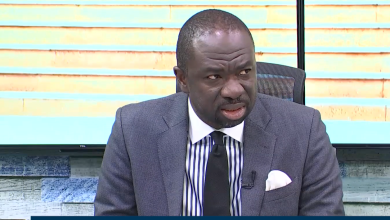
Philemon Kofi Quansah, Manager of St. Joseph Catholic Hospital in Koforidua, has drawn attention to this emerging reality, observing that patients are increasingly using AI to interpret medical advice and, in the process, gaining the confidence to challenge decisions made by doctors. His observation points to a profound transformation taking place beyond the technology itself. AI is not merely entering healthcare, It is entering the relationship between the person seeking care and the person providing it. For much of modern healthcare, the doctor has occupied a position of authority. The patient usually does not have the medical vocabulary to interpret a laboratory report, understand the significance of an abnormal result or distinguish between competing treatment options. Artificial intelligence is beginning to change that information imbalance. A patient who previously left a consultation without fully understanding what the doctor had said can now type a medical term into an AI chatbot and receive an explanation in ordinary language. Likewise, someone who does not understand a laboratory report can ask an AI system to explain what each figure means.
Another patient can ask what questions should be raised at the next appointment. That can be empowering right? But it can also be disruptive. Doctors are no longer necessarily dealing with patients who arrive with little information. Increasingly, they may be dealing with patients who arrive with too much information — some accurate, some incomplete and some entirely wrong. Recent reporting has documented patients uploading medical test results to AI systems in search of instant interpretations, with some subsequently questioning or rejecting medical advice. Doctors have raised concerns about hallucinated diagnoses, misinterpretation and privacy risks. This creates a new kind of consultation. The doctor is no longer simply explaining the patient’s condition. The doctor may first have to explain why the patient’s AI-generated explanation is wrong. There is an important distinction between an informed patient and an AI-confident patient. The former asks questions while the latter may believe the questions have already been answered.
That distinction matters because AI systems do not examine patients physically. They cannot feel a pulse, observe a patient’s breathing pattern, detect subtle changes in appearance, palpate an abdomen or understand the full clinical context surrounding a person’s condition. They work from the information supplied to them — and the quality of that information can determine the quality of the response. A 2026 Oxford study highlighted precisely this problem where researchers found a significant gap between the impressive capabilities of AI models in simulated medical tasks and the ability of ordinary people to use those systems effectively in real-world health decisions. The University of Oxford has warned that patients asking large language models about symptoms can receive wrong diagnoses or fail to recognize situations requiring urgent medical attention. In other words, an AI system can sound certain without actually being right. And that may be particularly dangerous in medicine.
The promise of AI in healthcare is difficult to dismiss. For someone living far from a major hospital, an AI-enabled health tool may provide basic information that would otherwise be difficult to obtain. For someone who cannot understand medical terminology, it may translate complex language into something accessible. For a patient preparing for a consultation, it can help generate questions. For healthcare workers, AI can potentially support diagnosis, documentation, data analysis and decision-making. Ghana itself is moving towards greater use of artificial intelligence and digital health. In April 2026, the government launched the National Artificial Intelligence Strategy, while a WHO-UNDP programme launched in Ghana in May is aimed at strengthening the country’s digital-health ecosystem, including AI governance and health-data safeguards. The Ghana Health Service has also held discussions on AI in health-service delivery, specifically examining the health system’s readiness for safe and effective adoption. The question therefore, is no longer whether AI will influence healthcare, It already is. The more urgent question is how that influence will be managed.
There is another way of looking at the phenomenon, as a patient questioning a doctor is not necessarily a problem. In fact, it can be a sign of healthier healthcare. A patient who understands why a medicine has been prescribed may be more likely to take it correctly. A patient who understands a diagnosis may be better able to recognize warning signs. A patient who feels confident asking questions may be more involved in decisions about their own treatment. The traditional model of healthcare often placed the professional at the centre of decision-making. But then again, AI could help move the system towards a model in which the patient becomes a more active participant. But that will depend heavily on how the technology is used. AI should ideally become a bridge between doctors and patients, not a substitute for either.
There is another danger hidden behind the convenience. To obtain an AI explanation, a patient may upload a laboratory report, medical history, prescription, scan or other personal health information. That information may contain some of the most sensitive details a person possesses. The question then becomes: Where does that information go? Who stores it?, Who can access it?, How is it protected?, Can patients understand the terms under which their information is processed? These questions become increasingly important as Ghana seeks to expand digital health while strengthening governance around health data. The WHO-UNDP programme launched in Ghana specifically identifies health-data safeguards and AI governance among its priorities.
The arrival of AI does not necessarily mean that doctors are losing their authority. It means their authority is being tested in a different way. A patient can now ask a machine to explain a doctor’s decision. A doctor, in turn, may have to explain not only what the decision is, but why it is medically appropriate. That could force healthcare professionals to communicate more clearly and could encourage patients to become more engaged. It could also expose weaknesses in a healthcare culture where patients sometimes leave consultations without fully understanding their condition or treatment. But there is a danger if AI becomes an unquestioned alternative authority. The phrase “AI says” cannot become the medical equivalent of “the doctor says.” Neither should be accepted blindly.
The consulting room of the future may therefore look very different. The patient will arrive with medical records on a phone. The doctor will have access to digital records and AI-assisted tools. An algorithm may have identified possible patterns before the consultation. The doctor will examine the patient, interpret the evidence and decide what is clinically appropriate. And the patient will ask questions — perhaps informed by an AI system. That does not have to be a battle between human intelligence and artificial intelligence. It could become a three-way conversation: doctor, patient and technology. But the human beings must remain at the centre. AI can explain, AI can compare, AI can suggest and AI can identify patterns. But it does not bear responsibility for the patient’s life in the same way a medical professional does and that distinction matters.
Ghana may therefore need to think beyond digital literacy. People need to learn not only how to use AI, but how to question AI. They need to understand that a fluent answer is not necessarily an accurate answer. They need to know when information should be verified with a qualified health professional. Doctors, too, may need to become comfortable with patients bringing AI-generated information into consultations. Instead of dismissing every AI-assisted question, health professionals could use those moments to correct misinformation, explain clinical reasoning and help patients distinguish credible information from speculation. That may ultimately produce a more mature healthcare relationship. Because the real danger is not a patient asking, “Doctor, why?” The real danger is a patient asking an AI system “What should I do?” — and acting on the answer without asking a doctor. The technology has given patients a new voice. The challenge for Ghana’s health system is to make sure that voice is informed, responsible and safely heard. Though AI may be changing who speaks in the consulting room, It must not change who takes responsibility for the patient’s care.
By: Joyce Owusu