Berko Conviction: AG Moves To Prosecute Others
Ghana and US authorities are pursuing others allegedly linked to the cross-border bribery scheme.
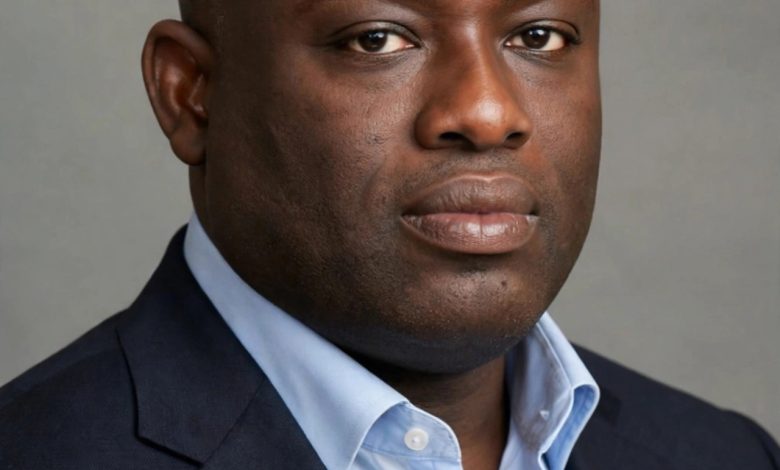
The conviction of former banker and Tema Oil Refinery Managing Director Asante Kwaku Berko by a federal jury in Brooklyn has opened a fresh phase in Ghana’s efforts to identify and prosecute other persons allegedly connected to a bribery scheme surrounding the development and financing of a power plant in Ghana. The Deputy Attorney General, Dr. Srem Sai disclosed in a public notice that the Attorney-General is working with United States authorities to pursue individuals implicated in the scheme, following Berko’s conviction on August 6, 2026, for conspiracy to violate the United States Foreign Corrupt Practices Act and related offences. The development brings renewed attention to a controversial power project negotiated between the Government of Ghana and a Turkish energy company, with Berko accused of facilitating illicit payments to Ghanaian officials in an effort to secure the project for the Turkish firm.
According to a statement issued by the Office of the Special Prosecutor (OSP) on Monday, August 10, Berko, a dual citizen of Ghana and the United States, was convicted by a federal jury in Brooklyn after being found to have conspired to pay more than US$1 million in bribes to multiple Ghanaian officials between 2014 and 2015 in connection with the development and financing of the power plant. The OSP said its investigations and evidentiary assistance contributed to the US prosecution, describing the case as a demonstration of the value of international cooperation in tackling corruption that crosses national borders. The office said the Federal Bureau of Investigation (FBI) received assistance from Ghana through an established mutual legal assistance framework, with the United States Department of Justice acknowledging the OSP’s role as providing “significant assistance to this prosecution.”
The latest move by the Attorney-General signals that Berko’s conviction is not being treated as the end of the matter. Rather, Ghanaian and American authorities are expected to continue examining the wider network of individuals and transactions surrounding the power project, particularly persons who may have participated in, facilitated or benefited from the alleged bribery arrangements. The cooperation is significant because the alleged conduct involved transactions, financial systems and individuals across several jurisdictions, making domestic prosecution alone potentially difficult.
US court documents previously alleged that the scheme operated between December 2014 and March 2017. Berko, who was then an executive director in the investment banking division of a US financial institution, was involved in managing a deal between the institution’s Turkish energy-company client and the Government of Ghana for the construction and financing of a power plant. The indictment alleged that Berko and his co-conspirators made corrupt payments to Ghanaian government officials to help the Turkish company obtain and retain the power-plant business. Court records further alleged that payments were channelled through US and foreign bank accounts as part of efforts to facilitate and conceal the scheme.
The case dates back to a major power-generation project that required negotiations involving the Ghanaian government, a Turkish energy company and international financial interests. US prosecutors alleged that Berko used his position to help advance the Turkish company’s interests and that bribes were paid to Ghanaian officials in connection with the project. Among the allegations contained in the US indictment was that five Ghanaian officials received US$5,000 each during an all-expenses-paid trip to Turkey in April 2015 to inspect equipment for the proposed power plant. The indictment also referred to subsequent communications concerning additional alleged payments after Parliament ratified the power deal in July 2015. These allegations formed part of the wider case that ultimately resulted in Berko’s conviction.
The OSP said its involvement in the case demonstrates the practical importance of mutual legal assistance between countries when investigating sophisticated financial and corruption offences. Such cooperation allows investigators to obtain evidence, trace financial transactions and share information that may be beyond the reach of a single jurisdiction. The office said the case “highlights the effectiveness of international cooperation in combating cross-border corruption crimes.” It added that the cooperation between the FBI and OSP had taken place “behind the scenes”, while the successful prosecution and its public outcome demonstrate the importance of mutual legal assistance. The OSP’s intervention also gives Ghanaian authorities a potentially stronger evidentiary foundation as the investigation turns toward other persons who may have been involved.
Berko is now awaiting sentencing. The OSP said he faces a maximum sentence of 30 years in prison, with sentencing scheduled for November 10, 2026. His conviction represents a major development in a case that has been unfolding across several years and jurisdictions. Berko was extradited from the United Kingdom to the United States in July 2024 after being arrested there in 2022. At the time, US prosecutors charged him with violations of the FCPA and money laundering offences arising from the alleged power-plant bribery scheme. The US case was originally filed in August 2020 in the Eastern District of New York.
With Berko now convicted, the focus is expected to shift increasingly to other individuals allegedly connected to the transactions. The Attorney-General’s engagement with US counterparts could therefore lead to further investigations, prosecutions or other legal action depending on the evidence gathered and the jurisdiction in which particular conduct occurred. For Ghana, the case also raises broader questions about the integrity of major public contracts and the safeguards surrounding negotiations between government and international companies. The international nature of the prosecution demonstrates that alleged corruption involving Ghanaian public officials can trigger legal consequences beyond Ghana’s borders, particularly where foreign financial institutions, international transactions or companies are involved. The OSP said the outcome was a “testament to the importance of mutual legal assistance”—a principle that could prove crucial as authorities pursue the wider ramifications of the Berko conviction.
Source: DoJ & OSP
Author: Joyce Owusu