Wednesday, 17th June, 2026
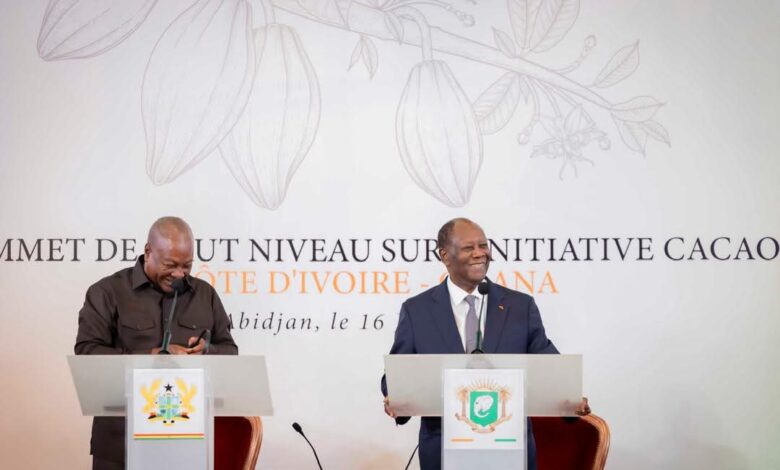
The world’s two preeminent cocoa producers have forged a landmark accord to synchronize farm-gate pricing regimes, a strategic convergence designed to elevate producer incomes, dampen market volatility, and consolidate their collective bargaining leverage within the global commodity architecture. The bilateral entente between Ghana and Côte d’Ivoire signals a decisive pivot toward producer solidarity after years of price asymmetry and smuggling arbitrage.
Officials from both nations finalized the harmonization framework following protracted technical consultations in Abidjan, establishing a unified floor price mechanism that will govern producer remuneration across the two jurisdictions. The initiative seeks to eliminate cross-border price differentials that historically incentivized illicit bean flows and undermined state marketing boards. By aligning remuneration structures, the countries intend to insulate smallholder farmers from exploitative middlemen and the vagaries of futures market speculation.
Ghana Cocoa Board and its Ivorian counterpart, the Conseil du Café-Cacao, will jointly administer the pricing protocol, with quarterly reviews to reflect exchange rate movements, input costs, and international terminal quotations. According to 3News, the agreement includes coordinated border surveillance, shared data systems, and a joint stabilization fund to intervene during price collapses. Policymakers contend that synchronized pricing will enhance traceability, discourage hoarding, and strengthen compliance with the Living Income Differential premium imposed on multinational buyers.
The collaboration emerges against a backdrop of climatic stress, disease outbreaks, and surging production costs that have eroded farmer margins despite record terminal prices. According to 3News, both nations account for the majority of global cocoa output, yet producer earnings have remained disproportionately low relative to value capture along the chocolate supply chain. Previous unilateral attempts to impose price floors were blunted by arbitrage, making harmonization a prerequisite for effective market governance.
Analysts view the pact as a paradigm shift in South-South commodity diplomacy, with potential ramifications for other tropical crop alliances. The success of the mechanism hinges on enforcement discipline, political continuity, and the willingness of multinational grinders to absorb the revised cost structure. Stakeholders anticipate that the harmonized regime will commence with the next crop season, pending ratification by respective cabinets.
Author: Korkor Anumu
Call or WhatsApp +233 20 2190 250 and share your story.