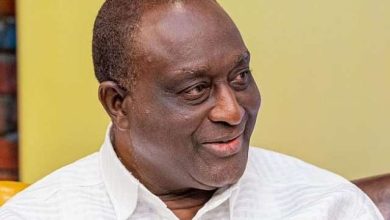
Lead counsel for former National Signals Bureau Director-General Kwadwo Adu Boahene, Samuel Atta Akyea, has criticised the Accra High Court for proceeding with his client’s trial despite being notified of a fresh application before the Supreme Court seeking to restrain the proceedings. Mr Atta Akyea described the decision as unfortunate, arguing that the outcome of the Supreme Court application could have a direct bearing on the ongoing trial.
His comments followed the High Court’s refusal to adjourn the case pending the determination of a review application filed by Ofoase-Ayirebi MP Kojo Oppong Nkrumah concerning the continuation of selected criminal cases during the legal vacation. According to a Joy News report, the defence had asked the court to suspend proceedings until September 2, when a three-member panel of the Supreme Court is expected to hear Mr Oppong Nkrumah’s review application. The defence maintained that the Supreme Court’s determination could affect whether the High Court should continue hearing the case during the legal vacation.
However, Deputy Attorney-General and Minister for Justice, Justice Justice Srem-Sai, opposed the request, arguing that the prosecution was at the final stage of presenting its case and had only one more day to close its evidence. He further contended that the Supreme Court had already ruled on the substantive interlocutory matter concerning proceedings during the legal vacation and that filing a review application did not, by itself, suspend the effect of the existing decision. Justice Francis Apanga Achibonga, after hearing arguments from both sides, rejected the application for an adjournment. The judge indicated that he had not identified any rule requiring the trial to be halted simply because a fresh application had been filed before the Supreme Court. He also noted that although the earlier Supreme Court decision had been delivered by a single judge, the decision remained binding unless and until it was set aside or reversed by a subsequent ruling. The court subsequently proceeded with the trial.
Reacting after the hearing, Mr Atta Akyea said he had expected the judge to take into account the fresh application pending before the three-member Supreme Court panel. “I thought the judge would respect the fact that the three judges should determine the injunction,” he said, explaining that the defence had specifically brought the new application to the court’s attention. The lawyer said the development had created a difficult situation for his client, particularly because Adu Boahene was expected to participate in the cross-examination of a witness. He argued that his client was not professionally trained to conduct cross-examination and that the defence was therefore placed in an uncomfortable position by the court’s decision to continue. “The pain of what this case is that he wants my client to cross-examine the witness. My client is not trained to do that,” Mr Atta Akyea said.
He added that while the defence did not want to be seen as disregarding the court’s orders, it considered the decision to proceed despite the pending Supreme Court application unfortunate. Mr Atta Akyea stressed that the defence’s renewed application was not simply a repetition of the earlier legal process. He said the first injunction application had been dismissed, but a subsequent application had been filed before a three-member panel of the Supreme Court seeking to restrain the High Court from continuing with the proceedings. “I brought it to his attention that, my Lord, although the first one has been dismissed, there is a repeat application restraining you from continuing with the case,” he said. The defence’s position is that allowing the Supreme Court panel to first determine the renewed application would have avoided the possibility of the High Court proceeding in a manner that could later be affected by the apex court’s decision.
The dispute forms part of legal arguments over the operation of the courts during the legal vacation and the circumstances under which selected criminal proceedings may continue during that period. For now, the High Court has maintained that the existing Supreme Court decision remains binding and has proceeded with the trial despite the fresh application awaiting determination. The development leaves the defence and prosecution at odds over whether the pending Supreme Court proceedings should have been sufficient reason for the trial to be put on hold.
By: Joyce Owusu