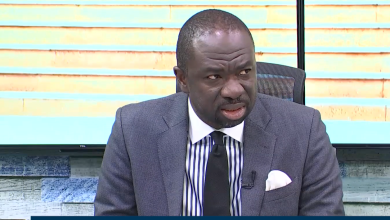
A prominent economist has dismissed the distinction being drawn between losses recorded under Ghana’s Domestic Gold Purchase Programme and the financial performance of the Ghana Gold Board, insisting that any fiscal shortfall attributable to the scheme carries tangible macroeconomic consequences. Professor James Atta Peprah, former Dean of the School of Economics at the University of Cape Coast, argued on Wednesday, August 19, 2026 that attempts to quarantine the liability are analytically untenable.
Prof. Atta Peprah maintained that the characterization of the deficit is immaterial to its effect. “Every loss is a loss. Every loss has immediate or short-term consequences and long-term consequences,” he stated on Eyewitness News. He emphasized that the burden ultimately reverberates through the public balance sheet irrespective of institutional labeling.
The intervention follows a rebuttal by GoldBod Chief Executive Sammy Gyamfi, who described claims of a one point seven billion dollar loss as a barefaced lie and attributed the figure to the Bank of Ghana’s legacy operations under the DGPP. Gyamfi cited GoldBod’s audited statements, which indicate an operational surplus and a broader profit surplus, as evidence of institutional solvency. He further challenged critics to locate a direct attribution to GoldBod within the International Monetary Fund’s assessment.
Prof. Atta Peprah countered that the operational and financial interdependence between GoldBod and the central bank renders such separation artificial. Because the Bank of Ghana provides the financing for GoldBod’s gold aggregation activities, he argued, any trading deficit crystallizes on the central bank’s books and by extension on the sovereign. He therefore advocated a structural delinking, proposing that GoldBod secure capital from the open money market at commercial rates rather than rely on central bank funding.
The academic’s prescription seeks to insulate monetary policy from quasi-fiscal operations and to impose market discipline on commodity aggregation. He contended that a commercial borrowing model would clarify accountability, price risk appropriately, and prevent contingent liabilities from migrating to the central bank.
As debate intensifies ahead of parliamentary scrutiny of extractive sector financing, the call for institutional demarcation adds a new dimension to the discourse on fiscal sustainability, central bank independence, and the governance of state-owned commodity vehicles.
Call or WhatsApp +233 20 2190 250 and share your story.
Author: Korkor Anumu