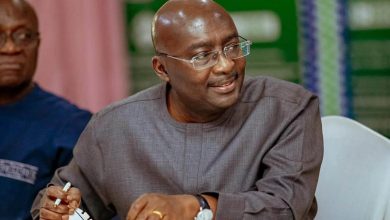
Government Spokesperson Felix Kwakye Ofosu has clarified that the GH¢1.4 billion spent on aircraft procurement covers a new presidential jet and four transport helicopters for the Ghana Air Force, dismissing claims that the amount was spent on the jet alone.
Speaking on JoyNews’ _The Pulse_ on Tuesday, November 17, Mr Kwakye Ofosu described the claim that the government is spending GH¢1.4 billion on the purchase of a presidential jet as false.
“Nobody is buying presidential jets for GH¢1.4 billion. That is untrue. My brother [Samuel Jinapor] started peddling when the matter first came up in Parliament last year, which he is continuing, and I am surprised that he is doing that,” he said.
He explained that the Ghana Air Force had requested four helicopters, most of which are intended for transport operations, and two executive jets to strengthen its fleet.
“Government has bought one presidential jet and has paid for the four transport helicopters for the military. One of those has arrived; three are on their way. It is all of this put together that costs GH¢1.4 billion,” he said.
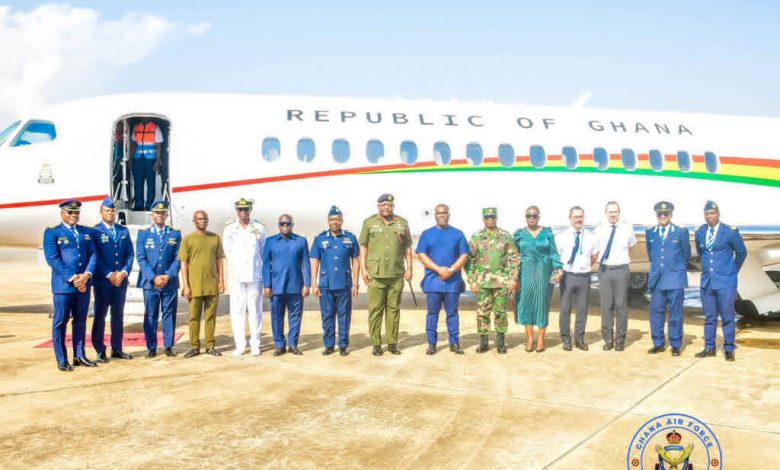
The Falcon 6X, manufactured by French aerospace company Dassault Aviation, was delivered to the Ghana Air Force on Monday, November 16, at a reported cost of US$60.68 million.
The government says the new jet will replace the 16-year-old Falcon 900EX, which has suffered recurring maintenance problems, including corrosion and leakages in its fuel tank.
Mr Kwakye Ofosu argued that the procurement was part of the government’s broader effort to retool the security agencies and strengthen national security.
He disclosed that most of the Air Force’s aircraft were currently grounded because of technical problems, ageing equipment and the unavailability of spare parts.
“Yesterday I was at the Air Force base. As I speak to you, apart from the helicopter that came in earlier this year, all their other helicopters are grounded because they have only one aircraft, the CASA, that is functional,” he said.
He said the Air Force had cited the condition of its existing fleet and difficulties obtaining spare parts from manufacturers in its memorandum to Cabinet requesting additional aircraft.