Japan Rescuers Race Against Time To Rescue Survivors
More than 100 aftershocks continue to rattle southwestern Japan as rescuers battle extreme heat to reach survivors trapped beneath collapsed buildings after a powerful earthquake.
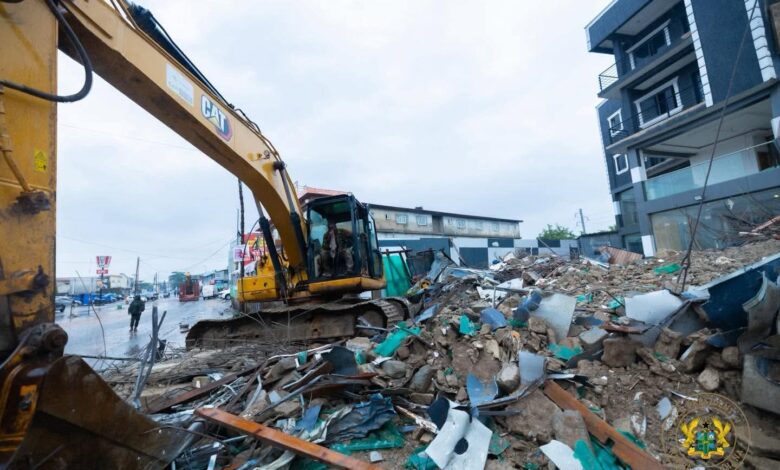
Japan’s emergency services are engaged in a desperate search for survivors after a powerful earthquake struck the southwestern island of Kyushu, killing at least 13 people and triggering more than 100 aftershocks that continue to threaten rescue operations. The magnitude 7.1 earthquake struck Kumamoto Prefecture on Tuesday, July 28 in the afternoon at a shallow depth of about 10 kilometres, causing widespread destruction across the region. Rescue teams are working around the clock to reach people believed to be trapped beneath collapsed buildings, including a paper factory and a major shopping mall, while authorities warn that strong aftershocks could persist for several days.
Prime Minister Sanae Takaichi described the rescue effort as “a race against time,” stressing that every hour is critical for those still trapped beneath the rubble. More than 4,600 emergency personnel have been deployed to the disaster zone as search operations continue despite dangerous conditions. Authorities said several other victims remain in cardiopulmonary arrest, a term commonly used before deaths are formally confirmed—raising fears that the death toll could increase. Three people also remain missing following the partial collapse and explosion at the Aeon Mall in Kashima, one of the hardest-hit sites. The shopping complex sustained severe structural damage after a section of its second floor collapsed shortly after the earthquake struck. An explosion that followed sent debris flying and ripped away large sections of the building’s exterior, exposing steel framework. Company officials confirmed that three employees were killed in the incident, while several others were injured. One person was rescued from a bathroom, and another was found in critical condition.
Elsewhere in Kumamoto Prefecture, rescuers searched through the remains of a paper factory in Yatsushiro City after two people were found with no signs of life and several others were reported missing. The disaster has displaced thousands of residents, many of whom have sought shelter in evacuation centres after their homes were damaged or destroyed. Power outages have also affected numerous communities, while transportation networks have suffered extensive disruption. Train services were suspended, roads cracked, bridges sustained damage, and several fires broke out in the immediate aftermath of the quake.
The Japan Meteorological Agency has warned residents to remain on high alert, cautioning that powerful aftershocks capable of reaching the highest levels of seismic intensity remain possible over the coming week, particularly during the next two to three days. The continuing tremors have complicated rescue efforts, forcing emergency workers to balance the urgency of locating survivors with the risk posed by unstable structures. Rescue operations are also being carried out under extreme weather conditions, with temperatures climbing to about 35 degrees Celsius. Authorities have advised both emergency responders and displaced residents to take precautions against heatstroke. Defence Minister Shinjirō Koizumi announced that approximately 300 air-conditioning units would be airlifted to the affected areas to improve conditions in evacuation centres.
Residents described terrifying scenes as the earthquake struck without warning. Hiroko Ogata, a 75-year-old restaurant owner in Yatsushiro City, said she feared for her life when the violent shaking began. “All of a sudden there was a big jolt, and I was surprised and scared. I have lived here for 75 years, but I have never experienced such a big quake. I thought I would die,” she said. Tourists also experienced the terrifying ordeal. American visitor Chantel Mohar said mobile phones issued earthquake alerts moments before intense shaking rocked the tour bus she was travelling in with her family. “There was just a lot of rocking and confusion,” she recalled.
Images from the disaster zone showed collapsed buildings, damaged roads, fractured bridges and historic structures reduced to rubble, including the worship hall of the 19th-century Yatsushiro Shrine. Seismologists noted that earthquake magnitude estimates may be revised as additional data becomes available, with international agencies reporting slightly different measurements. However, experts agree that the quake’s shallow depth significantly intensified the ground shaking across Kumamoto Prefecture, contributing to the extensive destruction. As aftershocks continue to shake the region, authorities have urged residents to remain vigilant and avoid damaged buildings while emergency crews press ahead with efforts to locate survivors and restore essential services.
Source: BBC News
Author: Joyce Owusu