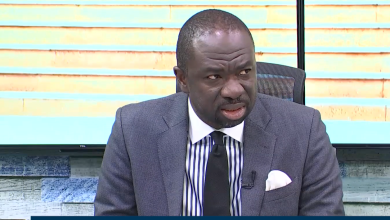
The Attorney-General and Minister of Justice, Dr Dominic Ayine, has rejected allegations that the government is using the Operation Recover All Loot (ORAL) initiative to persecute political opponents, insisting that investigations and prosecutions are being pursued on the strength of evidence. Dr Ayine said the administration had taken deliberate steps to ensure that cases arising from ORAL were subjected to thorough investigations, forensic audits and scrutiny by relevant state institutions before being presented before the courts.
He said President John Dramani Mahama had repeatedly instructed that the process must be conducted in a manner that would withstand judicial scrutiny and avoid any perception that political opponents were being targeted. The Attorney-General made the disclosure during a Citizens Engagement in Bolgatanga on Friday, August 14, 2026, as President Mahama continued his engagement with residents of the Upper East Region under the government’s Resetting Ghana Agenda. According to Dr Ayine, the ORAL Committee, established by President Mahama before he assumed office, conducted preliminary investigations into allegations of corruption and subsequently submitted its findings to his office.
He said his office had since developed 34 dockets from the committee’s report, with investigations into all the cases completed and preliminary findings established. “A lot of them are being prepared for filing in court,” he stated. Dr Ayine explained that the investigations had involved collaboration among several state institutions, alongside forensic audits aimed at establishing the facts and strengthening the evidence before prosecution. He cited investigations into alleged financial irregularities surrounding the National Cathedral as an example, noting that the President had directed the Auditor-General to conduct an audit, with PricewaterhouseCoopers subsequently submitting its report.
He maintained that the process demonstrated the government’s commitment to establishing evidence rather than pursuing political opponents. “So, President Mahama is not persecuting political opponents,” he said. The Attorney-General said President Mahama had been particularly concerned that investigations conducted under ORAL should be sufficiently thorough to prevent the initiative from being portrayed as an instrument of political persecution. He said the government had therefore relied on investigative bodies, including the Bureau of National Investigation and the Economic and Organised Crime Office, as well as independent forensic audits, to establish the facts surrounding suspected financial wrongdoing. Dr Ayine stressed that the prosecution of alleged corruption cases was being guided by evidence and the requirements of the law rather than political considerations. He said the President would not authorize him, in his capacity as Attorney-General, to use ORAL as a means of persecuting political opponents.
Dr Ayine also dismissed claims by the opposition New Patriotic Party (NPP) that ORAL-related corruption cases were being deliberately delayed or were collapsing before the courts. He said he had filed five corruption-related cases within his first year as Attorney-General, describing the pace as significant when compared with the length of time some corruption cases had taken under previous administrations. He cited several past cases, including Republic v Victor Selome, which he said lasted about six months, and Republic v Ibrahim Adam and four others, which lasted approximately 23 months. Other corruption cases, he said, had remained before the courts for periods ranging from four to almost six years. Against that background, Dr Ayine argued that claims that ORAL prosecutions were being unnecessarily delayed were not supported by the record. “The narrative that is going on by the NPP that ORAL is delaying is not true. The evidence is watertight,” he said.
The Attorney-General pointed to the National Signal Bureau case as an example of what he described as the strength of evidence assembled by his office. He said documentary evidence presented before the court showed the alleged transfer of GH¢16.5 million in public funds from a public account into a private company account, after which the funds were allegedly used for private purposes. Dr Ayine argued that the documentary evidence placed before the court provided a basis for the prosecution’s case, while cautioning that he would not make comments that could prejudice matters still before the judiciary. Dr Ayine further clarified that ORAL was not confined to the 34 dockets developed from the committee’s initial report.
He said investigations were continuing into other matters, including activities associated with the Inter-Ministerial Committee on Local Government, which was headed by Miracles Aboagye. “ORAL is not just about the 34 dockets that have been built. ORAL is also comprehensively pursuing investigations in other matters,” he said. The Attorney-General expressed confidence that the public would begin to see further outcomes from the investigations and prosecutions in due course. He maintained that the ultimate objective of ORAL was to strengthen accountability, investigate alleged corruption and recover public resources suspected to have been lost through wrongdoing. Dr Ayine reiterated that the government would not allow the initiative to become a tool for political persecution. “I want to emphasize the fact that His Excellency the President, as far as ORAL is concerned, will never approve that in my capacity as Attorney-General, we engage in any persecution of a political opponent,” he stressed.
By: Joyce Owusu