President John Dramani Mahama has reaffirmed Ghana’s commitment to turning continental migration and integration pledges into tangible action, declaring that his administration’s leadership will be measured by how faithfully it fulfills the commitments it makes.
Delivering a keynote address at the Metropolis International Migration Conference at the University of Ghana, Legon, in Accra, the President said Ghana intends to lead by putting its commitments into practice.
“Our leadership will be judged by how we fulfill the commitments we make,” he said.
Highlighting a milestone in that effort, the President recalled that on Africa Day this year, Ghana launched its electronic visa platform and waived visa fees for all holders of African passports.
“And we did so because an Africanism must guide the decisions we make as well as the words that we speak,” he said, noting that the policy was rooted in a deeper pan-African conviction rather than rhetoric.
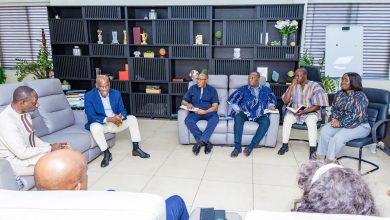
President Mahama was speaking on Wednesday, November 18, when he officially opened the 2026 Metropolis International Migration Conference, organised as part of activities marking the 20th anniversary of the University of Ghana’s Centre for Migration Studies.
The conference, themed _“Rethinking African Mobility: Past Lessons, Present Realities, Future Possibilities,”_ brings together policymakers, academics, researchers and migration practitioners from across the world. It is being hosted on African soil for the first time in its three-decade history.
Addressing participants, President Mahama said Africa must move beyond being a subject of global migration discussions and take an active role in shaping the policies and decisions that affect the movement of its people.
He identified five priority areas for improving migration governance across the continent:
– Governing migration as Africans actually move, by implementing the AU Free Movement Protocol, Regional Economic Communities and Agenda 2063.
– Strengthening security while making it easier for people to travel legally.
– Expanding regular migration pathways for work and study, alongside skills partnerships and investment.
– Building equitable international partnerships grounded in dignity and shared responsibility.
– Linking mobility to continental trade, jobs and integration through the African Continental Free Trade Area (AfCFTA).
“The AU Free Movement Protocol, our Regional Economic Communities and Agenda 2063 provide clear direction in this regard, and yet the gap between the commitments we make in conference rooms and what an African citizen experiences at our border posts remains very wide,” he said.
He also condemned recent xenophobic attacks in South Africa, describing vigilantism and violence against foreigners as unacceptable ways of addressing migration challenges.
“South Africa has a legitimate right to address its migration crisis, but mob justice is not the solution,” he said, adding that migration challenges “will not be resolved by marauding crowds, searching for and brutalising people believed to be illegal immigrants.”
Highlighting the economic importance of migration, President Mahama disclosed that Ghana had recorded remittance receipts exceeding US$7 billion through the country’s financial system.
He said remittances remain a major source of household income and economic resilience, supporting education, healthcare, businesses and other essential needs.
With Ghana preparing to assume the chairmanship of the African Union in 2027, the President said mobility and continental integration must remain central to Africa’s development agenda.
“The promise of the African Continental Free Trade Area is enormous. If fully implemented, it has the potential to lift millions of Africans out of extreme poverty,” he said.