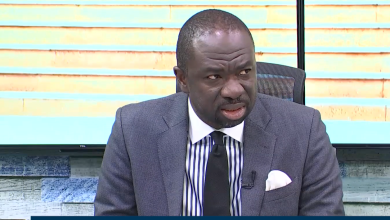
COPEC Executive Secretary Duncan Amoah says investigations into public officials are accountability, not persecution.
The Executive Secretary of the Chamber of Petroleum Consumers (COPEC), Duncan Amoah, has rejected claims that Ghana’s democracy is under attack, arguing that investigations into politicians and public officials should not automatically be construed as political persecution. Mr Amoah said democratic governance depends on strong institutions being allowed to perform their constitutional duties while remaining open to scrutiny and criticism from citizens and political actors.
His comments come in the wake of the New Patriotic Party’s (NPP) “Democracy Under Attack” demonstration held on August 6, 2026, during which the party raised concerns about what it described as threats to democratic governance and the alleged targeting of some of its members. Speaking on The Big Issue on Saturday, August 8, Mr Amoah said he disagreed with the characterisation of Ghana’s current political environment as one in which democracy was under attack.
He maintained that the mere fact that state institutions were investigating individuals who had previously occupied public office did not, by itself, constitute an assault on democratic principles. “When you have institutions get to work, you don’t have any objection but to sometimes critique the way institutions work. But to lump everything together and say the entire democratic process is under attack, some of us would beg to differ,” he said.
Mr Amoah said Ghana’s democratic institutions must be given the space to investigate allegations and make adverse findings where necessary without such processes being immediately dismissed as politically motivated. He argued that accountability was fundamental to maintaining public confidence in state institutions and ensuring that public office did not become a shield against scrutiny. According to him, political affiliation should not determine whether a person is investigated or held accountable when there are concerns about the management of public resources or the conduct of public officials.
He said he had not observed a situation in Ghana where an opposition politician had been targeted merely for openly expressing political views against the government. “I have not in Ghana seen or come across an opposition element being just vocal and being targeted by government,” he said. His position, however, did not amount to a dismissal of concerns over the conduct of state institutions. Rather, he maintained that criticism of institutions was legitimate and necessary in a democracy, provided such criticism did not seek to prevent those institutions from carrying out their mandates.
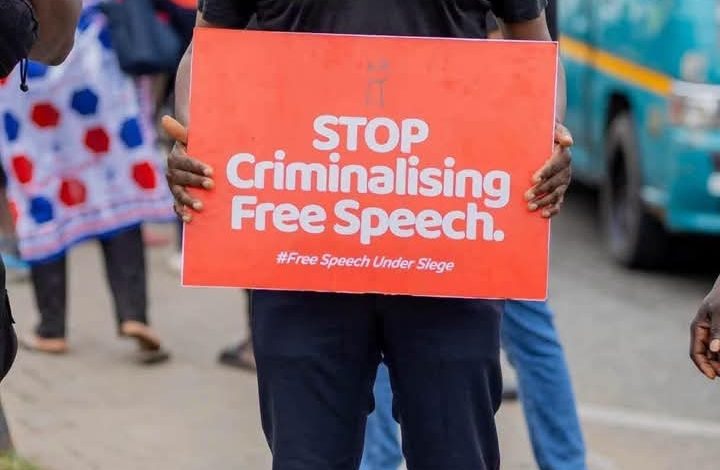
Mr Amoah also pointed to freedom of expression as evidence that Ghana continues to retain important democratic safeguards. He said citizens and political actors remain able to criticize government policies and express dissenting opinions publicly. “Freedom of speech, which is one of the core tenets of democracy, clearly is also not being attacked as we speak. You can speak your mind,” he said.
He nevertheless cautioned that freedom of expression carried responsibilities and should not be confused with the right to threaten or intimidate others. “Speaking your mind does not mean infringing on the freedoms or liberties of other people,” he added
Mr Amoah expressed particular concern about what he described as the increasing use of veiled and direct threats in Ghana’s political discourse. He cited statements by political actors suggesting that opponents who are currently in power could face consequences when political fortunes change. “You see a threat from the opposition that says the tables will turn and will do things to you. You would hear functionaries sometimes issue those threats,” he said.
He warned that such rhetoric could gradually undermine the principle of accountability by creating a political culture in which officials believe their actions should not be scrutinized because the political balance of power could eventually change. “What you are indirectly saying is that, okay, even if we did wrong, or even if adverse findings are made against us, do not go after us, because someday you may not be in power,” he said. Mr Amoah said such an approach would be damaging to the country’s democratic development because it could turn accountability into a partisan contest rather than a constitutional obligation.
He argued that the consequences of allowing political considerations to determine whether public officials should be investigated would extend beyond the NPP and the governing National Democratic Congress (NDC). “If we allow this country to be governed that way, it is not the NPP-NDC that suffers, it is the people,” he said.
He therefore urged political actors and their supporters to separate legitimate concerns about the conduct of state institutions from attempts to shield individuals from accountability. For Mr Amoah, the strength of Ghana’s democracy should not be measured by whether members of a particular political party are facing investigations, but by whether institutions are able to operate independently, whether citizens can freely criticise them, and whether due process is respected.
His comments have added to the wider debate over the balance between political accountability and the protection of democratic freedoms, particularly at a time when investigations involving former public officials have become a major feature of Ghana’s political discourse.
Source: Citi News
By: Joyce Owusu