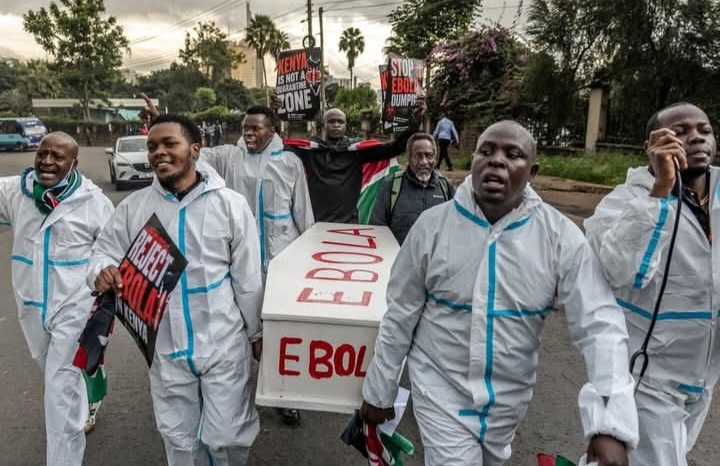
A proposed United States Ebola quarantine facility at Laikipia Air Base in central Kenya has triggered lethal protests and judicial intervention, as citizens accuse Washington of exporting health risks to a nation with a fragile medical system. The controversy escalated this week after two demonstrators were killed in Nanyuki, intensifying scrutiny of the bilateral arrangement.
According to the Kenyan High Court, construction and operations at the fifty-bed unit were suspended on May twenty eight and again blocked for three weeks on Tuesday, with Judge Patricia Nyaundi ordering the government to disclose all agreements and operational protocols within seven days. Despite the injunction, flight-tracking data shows at least twenty US military flights delivered equipment and specialist staff to Nanyuki between May twenty three and May thirty one, including C-130 and C-17 transport planes. According to a US official, the flights brought physicians, engineers, laboratory experts and construction workers, but no patients.
President William Ruto defended the project, stating that Kenya is acting responsibly under a long-running health partnership with Washington. He emphasized that the facility forms part of a wider national preparedness plan and would serve Kenyans and foreign nationals, though US officials have described it exclusively for Americans exposed to Ebola in Democratic Republic of Congo or Uganda. According to the US State Department, thirteen point five million dollars has been committed to Kenya’s Ebola preparedness efforts. Health Minister Aden Duale said the quarantine center was for everyone, not solely US nationals.
Public fury centers on perceptions of risk dumping. Protest organiser Patrick Wahome said two people died of gunshot wounds after police opened fire on hundreds of demonstrators Monday in Nanyuki. A security source confirmed two deaths but did not specify the cause, while Police spokesperson Michael Muchiri said he was not aware of the deaths. Local leaders, including Laikipia Governor Joshua Irungu, have publicly opposed the center, warning it could expose residents who work inside the air base. The Law Society of Kenya and constitutional watchdog Katiba Institute filed suit, arguing Kenya’s health system cannot handle foreign Ebola patients.
The dispute unfolds against a regional outbreak of the Bundibugyo strain of Ebola, with more than nine hundred suspected cases and over two hundred twenty deaths reported in Democratic Republic of Congo, plus spillover cases in Uganda. Kenya has recorded no Ebola cases. A US diplomatic cable seen by Reuters noted that President Ruto may have underestimated domestic opposition, compounded by rising fuel prices and the anniversary of deadly anti-government protests. Senior US health official Mehmet Oz told reporters that the administration is confident of reaching a favorable arrangement with Kenya.
Analysts warn the standoff tests sovereignty, transparency, and public trust in bilateral health accords. The next court hearing is scheduled for June twenty three. Until then, the facility’s future remains suspended in law yet advancing on the ground, leaving a volatile intersection of global health security and local consent unresolved.
Source: #Howedey.comNews
Call or WhatsApp +233 20 2190 250 and share your story.
Author: Stella Sunu