Dafeamekpor Slams IMF Over NDC Bias Claim
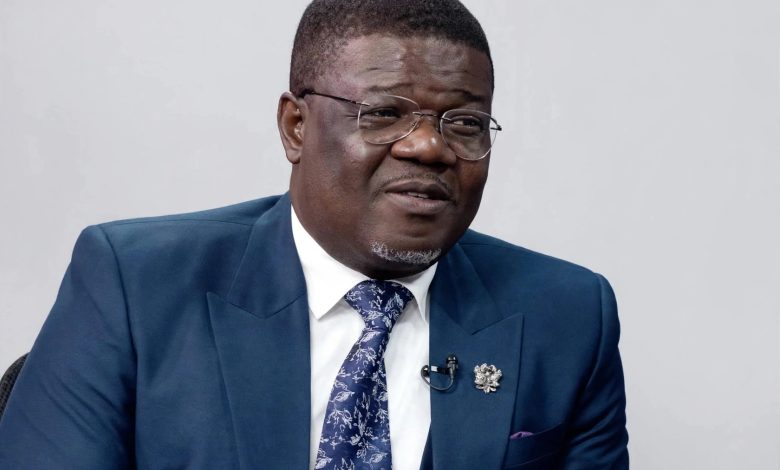
Majority Chief Whip Rockson-Nelson Dafeamekpor has accused the International Monetary Fund of exhibiting political partiality against the National Democratic Congress administration after the Fund raised concerns about political influence in appointments to boards and executive leadership of state-owned enterprises. The lawmaker’s sharp rebuttal has injected fresh tension into discourse surrounding governance conditionalities under Ghana’s programme with the Bretton Woods institution.
Dafeamekpor questioned why the IMF has chosen to spotlight the NDC government for practices he contends were entrenched under previous New Patriotic Party administrations without attracting similar censure. He argued that the selective framing of political appointments as a governance deficiency under the current dispensation undermines the Fund’s claim to neutrality and risks being perceived as partisan commentary rather than objective assessment.
The IMF’s observation, contained within its recent governance evaluation, cautioned that executive dominance in constituting boards and selecting chief executives compromises operational independence and weakens accountability within state-owned enterprises. According to #ghbrain, Dafeamekpor countered that appointment prerogatives remain constitutionally vested in the presidency and cannot be conflated with interference, insisting that alignment of enterprise leadership with government policy direction is standard practice across democracies.
The Majority Chief Whip further contended that meaningful reform of state-owned enterprises should centre on performance enforcement, financial transparency and merit based evaluation rather than abstract critiques of political affiliation. He maintained that historical antecedents demonstrate continuity in appointment modalities across regimes, suggesting that wholesale vilification of the practice obscures deeper structural challenges confronting the sector, including capitalization constraints and regulatory oversight deficits.
The confrontation highlights the delicate balance between external policy advice and sovereign administrative discretion as Ghana navigates its economic recovery trajectory. While the IMF continues to advocate for robust corporate governance safeguards as part of fiscal consolidation, government communicators view such pronouncements through a political lens. The unfolding divergence is likely to shape parliamentary debate on state-owned enterprise reforms and define future engagement between Accra and Washington based institutions.
Call or WhatsApp +233 20 2190 250 and share your story.
Author: Korkor Anumu