Democracy Needs Debate, Not Dehumanisation – Opoku Prempeh
Matthew Opoku Prempeh has urged Ghanaians to defend free expression without allowing political disagreements to degenerate into personal attacks and abuse.
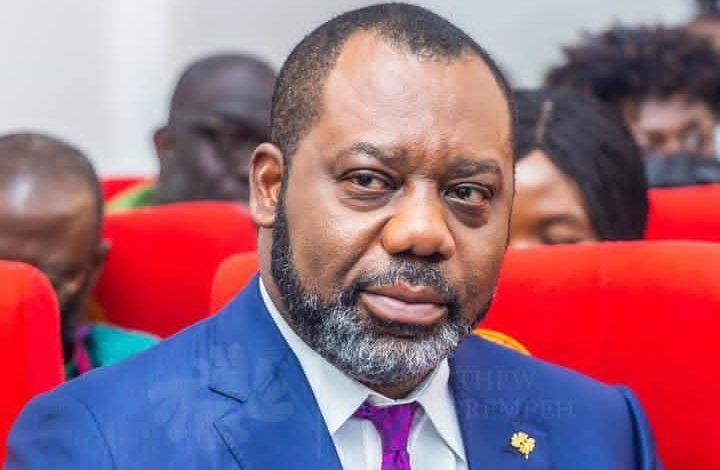
Former Energy Minister and New Patriotic Party (NPP) stalwart Matthew Opoku Prempeh has called for greater civility in Ghana’s political discourse, warning that the growing use of insults and personal attacks threatens the quality of democratic debate. In a message posted on Facebook on Tuesday, August 11, 2026, Dr Opoku Prempeh said democracy depended on the freedom of citizens to question leaders, challenge political parties and criticise ideas, but cautioned that such freedoms should not be used to justify abuse or the humiliation of others.
He said Ghana’s traditional emphasis on respect should remain an important guide for political engagement, particularly at a time when public discussions are increasingly characterized by hostility and personal attacks. According to him, Ghanaian society has historically placed a premium on courtesy and restraint, teaching people from childhood to greet others, listen and choose their words carefully even when they disagree. He stressed, however, that respect should not be confused with silence or unquestioning acceptance of authority.
“Respect has never meant silence,” he said, arguing that leaders, elders and public officials must remain open to criticism and scrutiny. Dr Opoku Prempeh said the important distinction was between criticism intended to identify shortcomings and insults intended to demean or provoke. “Criticism identifies what is wrong and can help us think about what must improve. Insult seeks only to humiliate, provoke or silence,” he stated. He warned that when personal attacks become the dominant feature of political conversations, the substance of public debate is displaced by attempts to discredit individuals rather than engage their ideas.
He also expressed concern about the influence of such behaviour on younger generations, arguing that the political environment being created today would shape how young people understand democratic participation in the future. “When cruelty is rewarded with attention and insults are mistaken for courage, young people learn that the loudest voice matters more than the strongest argument,” he said. The former minister maintained that political disagreements were inevitable in a democracy and should not be treated as evidence of hostility between citizens.
He said Ghanaians could hold strongly opposing political positions while preserving the dignity of those on the other side of the political divide. “We can disagree firmly without becoming disrespectful. We can challenge public officials without dehumanising them. We can defend our political beliefs without treating those on the other side as enemies,” he said. Dr Opoku Prempeh also acknowledged that public officials and political leaders must be prepared to face criticism as part of their responsibilities.
He said his experience in public service had taught him that criticism was an unavoidable part of leadership and, when properly offered, could be useful in helping leaders recognize their shortcomings. “A leader who is unwilling to be questioned is unwilling to learn,” he said. His comment is an eye opener on the increasingly combative nature of Ghana’s political discourse, particularly on social media, where political disagreements can quickly turn into personal attacks.
Dr Opoku Prempeh argued that protecting freedom of expression required citizens to recognize that the right to speak freely also carried an obligation to use that freedom responsibly. A“Democracy requires freedom of expression, but it also requires responsibility of expression,” he said. He urged Ghanaians to make the quality of public conversation a shared responsibility, saying the language used in political and social debates ultimately reflects the kind of society citizens are collectively creating.
He called for a political culture in which competing ideas are confronted with stronger arguments rather than insults, criticism leads to reflection and disagreements do not destroy mutual respect. “Let us build one in which ideas are answered with better ideas, criticism produces reflection, and disagreement does not cost us our dignity or our humanity,” he said.
By Joyce Owusu