Mahama Commissions National DNA Lab At Noguchi
First Locally Bottled Vaccines Expected In 2027
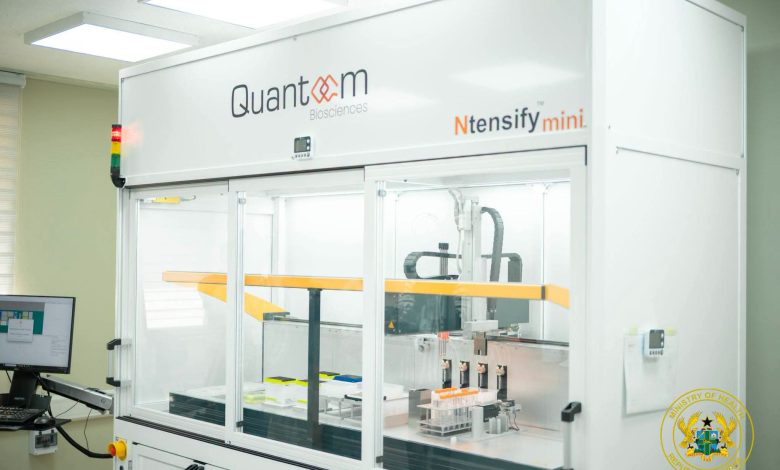
President John Dramani Mahama has commissioned a national Human Identification Laboratory at the Noguchi Memorial Institute to boost local DNA testing for criminal investigations, disaster victim identification and family-related disputes, reducing reliance on foreign laboratories.
The facility, popularly known as the DNA Laboratory, was commissioned on Wednesday, November 18, 2026, alongside new vaccine research laboratories.
The Human Identification Laboratory will provide DNA testing services locally for forensic investigations, disaster victim identification, paternity and maternity disputes, as well as inheritance-related cases.
Until now, forensic and disaster victim samples had to be sent abroad – notably to South Africa – for DNA analysis.
President Mahama said the need for the facility became urgent following the August 6, 2025 helicopter crash, which claimed eight lives and required tissue samples from the accident site to be sent to South Africa for identification.
“It was a day of shame for Ghana that we could not carry out our own DNA analysis in-country. That will be a thing of the past,” he said.
He said the absence of local capacity had delayed identification efforts and prolonged the wait for affected families.
Health Minister, Kwabena Mintah Akandoh, said the facility was established in response to the President’s directive following the disaster. He explained that although Ghana had qualified scientists, the country lacked the specialised equipment needed to conduct DNA analysis locally.
President Mahama said the laboratory would also support criminal investigations, including rape and murder cases, as well as paternity and other identity-related investigations.
*Vaccine laboratories*
The President also commissioned Vaccine Research and Development Laboratories, comprising mRNA and protein laboratories designed to support vaccine research, development and collaboration among Ghanaian scientists and their international counterparts.
He said Ghana was among five African countries using messenger RNA (mRNA) technology in vaccine research and development, and that the National Vaccine Institute was pursuing international partnerships, including discussions on cancer vaccine research.
He urged Ghanaians to participate in clinical trials, saying public confidence in scientific research is essential for the country’s efforts to develop and manufacture vaccines locally.
Health Minister Akandoh said the accompanying vaccine research laboratories would strengthen Ghana’s ability to train vaccine producers locally, with the first vaccines bottled in Ghana expected on the market in 2027.
Chief Executive Officer of the National Vaccine Institute, Dr Sodzi Sodzi-Tettey, said Ghana is on track to manufacture its first vaccine – a Tetanus-Diphtheria (Td) vaccine – by 2027, with the first of three bulk substances required for production already in the country at Atlantic Life Sciences.
President Mahama said the two laboratories would strengthen Ghana’s capacity to conduct vaccine research and forensic investigations locally while reducing reliance on external laboratories.